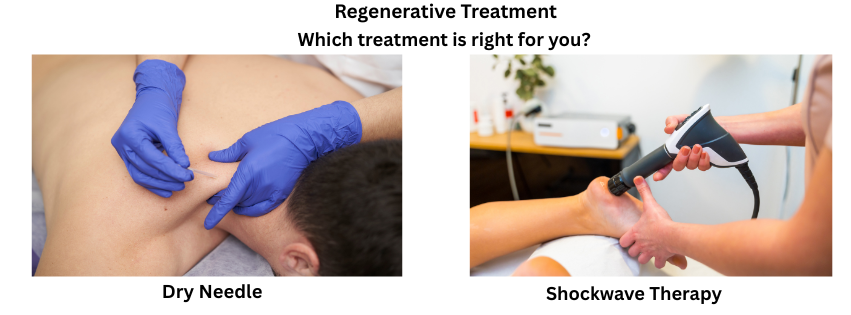
If you’ve been researching non-surgical ways to manage chronic pain, you’ve probably come across two treatments that keep showing up: dry needling and shockwave therapy. Both are backed by clinical evidence, both are offered at SureCure Physical Therapy & Wellness in Carrollton, and both can help you avoid pain medication and surgery — but they work very differently, and they’re not interchangeable.
This guide breaks down exactly how each treatment works, which conditions each one is best suited for, whether they can be combined, and how to figure out which one (or both) makes sense for your specific pain.
What Is Dry Needling? (Quick Overview)
Dry needling is a technique where a trained physical therapist inserts thin, sterile needles directly into myofascial trigger points — the tight, “knotted” bands of muscle that cause referred pain, stiffness, and restricted movement.
Unlike acupuncture, which is rooted in traditional Chinese medicine and energy meridians, dry needling is grounded in Western anatomy and neurophysiology. The needle creates a small, localized disruption in the trigger point, which:
- Triggers a local twitch response that helps release the tight muscle band
- Increases blood flow to the area, delivering oxygen and nutrients needed for healing
- Interrupts the pain signals your nervous system sends to your brain
- Helps reset abnormal muscle tension patterns
Sessions are typically quick (15–30 minutes) and are often paired with other physical therapy techniques like manual therapy or targeted exercise.
Best known for: immediate relief of tight, “knotted” muscle pain and trigger-point-driven discomfort.
What Is Shockwave Therapy? (Quick Overview)
Shockwave therapy (also called Extracorporeal Shockwave Therapy, or ESWT) uses acoustic pressure waves delivered through a handheld device on the surface of the skin. Rather than targeting muscle trigger points directly, shockwave therapy is designed to stimulate the body’s own healing response in tendons, ligaments, and connective tissue.
The acoustic waves work by:
- Increasing local blood circulation and metabolic activity
- Stimulating collagen production for tissue repair
- Breaking down calcific deposits in chronic tendon injuries
- Reducing pain sensitivity in the treated area over a series of sessions
Shockwave therapy is completely non-invasive (no needles involved) and is typically delivered in a series of 3–6 sessions, spaced about a week apart, for cumulative healing effects.
Best known for: chronic tendon conditions, plantar fasciitis, tennis elbow, and slow-healing soft tissue injuries.
Key Differences: How They Work
| Dry Needling | Shockwave Therapy | |
|---|---|---|
| Method | Thin needle inserted into muscle | Acoustic waves applied to skin surface |
| Invasiveness | Minimally invasive | Non-invasive |
| Primary target | Muscle trigger points | Tendons, ligaments, connective tissue |
| Mechanism | Disrupts trigger point, resets muscle tension | Stimulates cellular repair and collagen production |
| Typical relief timeline | Often felt within 24–48 hours | Builds cumulatively over a series of sessions |
| Session length | 15–30 minutes | 10–20 minutes |
The core distinction is simple: dry needling addresses muscle-based pain directly at the trigger point, while shockwave therapy addresses tissue healing at a deeper, structural level — particularly in tendons that have become thickened or degenerated from chronic overuse.
Which Conditions Respond Best to Each
Dry needling tends to work best for:
- Neck and shoulder tension, including tension headaches
- Lower back pain caused by muscle tightness
- Sciatica-related muscle guarding
- Muscle knots from repetitive strain or poor posture
- Post-exercise or sports-related muscle tightness
Shockwave therapy tends to work best for:
- Plantar fasciitis and chronic heel pain
- Tennis elbow and golfer’s elbow
- Achilles tendinopathy
- Chronic tendon injuries that haven’t responded to rest
- Calcific shoulder tendinitis
If your pain feels like a tight, sore knot that flares with stress or bad posture, dry needling is usually the better starting point. If your pain is centered on a joint or tendon and has been lingering for months despite rest, shockwave therapy is often more effective.
Can They Be Combined? (What Research Shows)
In many cases, yes — and research increasingly supports it. Recent clinical studies on enthesopathy (pain where tendons attach to bone) found that combining shockwave therapy with needling techniques produced better pain reduction than either treatment used alone.
This makes sense clinically: shockwave therapy addresses the deeper tissue and tendon healing process, while dry needling addresses the surrounding muscle tension that often develops as the body compensates for the injury. Treating both the structural and muscular components of a pain pattern typically produces faster, more complete results than treating either in isolation.
At SureCure, your therapist will assess your specific presentation — including how long you’ve had the pain, what’s driving it, and how your body is compensating — before recommending one treatment, the other, or a combined plan.
What to Expect During Treatment at SureCure
Every treatment plan at SureCure starts with a hands-on evaluation, not a generic protocol. Your therapist will:
- Assess your movement patterns, posture, and the specific tissues involved in your pain
- Identify whether your primary issue is muscular, tendon-based, or a combination of both
- Recommend dry needling, shockwave therapy, or a combined approach
- Pair your treatment with targeted exercise and manual therapy to support long-term results, not just short-term relief
Most patients tolerate both treatments well. Dry needling may cause brief muscle soreness (similar to a deep massage) for a day or two, while shockwave therapy can feel like a series of quick pulses with mild discomfort during treatment that resolves quickly afterward.
How to Know Which One Is Right for You
A simple way to think about it:
- Pain feels like a tight muscle knot, tension, or spasm? → Start with dry needling
- Pain is centered on a tendon or joint and has lingered for weeks or months? → Start with shockwave therapy
- Pain involves both muscle tightness and a chronic tendon issue? → A combined approach is likely your best option
That said, self-diagnosing muscle vs. tendon pain isn’t always straightforward — many patients have both compensating for each other. The most reliable way to know is a proper evaluation with a licensed physical therapist who can pinpoint exactly what’s driving your pain.
Book a Consultation in Carrollton
You don’t have to guess which treatment is right for your pain — or keep relying on medication and rest that isn’t working. At SureCure Physical Therapy & Wellness in Carrollton, our team will evaluate your specific pain pattern and build a plan using dry needling, shockwave therapy, or both, so you can get back to an active, pain-free life without surgery or long-term medication.
Schedule your consultation today and take the first step toward lasting pain relief.
Book Your Free Consult Now